


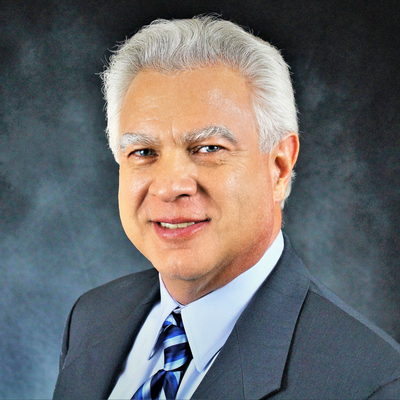
Anthony Klinkert
Technology / Internet
Services offered
Sr. Internet of Things (IoT) Solution Architect with RF Engineering, Operations Research, and Data Science.
Doctor of Engineering (DE), Registered Professional Engineer (PE), Certified Master Architect (CMA)
DATA SCIENCE / GENERATIVE AI / MACHINE LEARNING - Apply Ph.D equivalent Doctor of Engineering skills and knowledge in research, statistics, and model creation to advances in AI related to large language models (LLM), knowledge bases, and prompt engineering to solve client opportunities in automation, customization, asset tracking and forecasting, supply chain demand and supply optimization. Apply two nano degrees for business leaders in Predictive Analytics and AI to client opportunities.
INTERNET OF THINGS – As a Senior IoT Architect, I integrate my RF solution architect, operations research doctorate, and data scientist certification, and apply them to the emerging IoT industry. I can formulate a value-model for an IoT business, estimate a return on investment, create a software model of a device. I design connectivity solutions (typically wireless), formulate a cyber analytics model, including objective function and constraint equations. I solve for real-time optimized process control and deploy prescriptive analytics. I can create predictive models using statistics. I have completed over 100 IoT solutions for clients in several verticals.
DATA SCIENCE – My Doctor of Engineering (Ph.D. equivalent) studies at SMU included the crucial part of data science, namely statistical model creation and prescriptive analytics-based formulations of optimization models. My doctoral praxis focused on communications network topology deterministic mathematical optimization. My design-of-experiment work consisted of taking a business case, generating datasets, preparing, visualizing, exploring the data, then creating conjectures, formulating and performing hypothesis testing, evaluating, and drawing inferences from the data, including statistical predictive models and optimizations, and presentation of conclusions. I can apply this experience to an IoT related or data scientist project, ideally in the wireless industry, where I have deep subject matter expertise.
SPECIALTIES – Linear, network flow, and MIP programming, mathematical model formulation, statistical predictive models, Gurobi operations research solver, Hypothesis Testing, Statistical Analysis (SAS JMP), and ANOVA evaluation. Matlab programmer, Python trained.
Experience
Doctor of Engineering (DE), Registered Professional Engineer (PE), Certified Master Architect (CMA)
DATA SCIENCE / GENERATIVE AI / MACHINE LEARNING - Apply Ph.D equivalent Doctor of Engineering skills and knowledge in research, statistics, and model creation to advances in AI related to large language models (LLM), knowledge bases, and prompt engineering to solve client opportunities in automation, customization, asset tracking and forecasting, supply chain demand and supply optimization. Apply two nano degrees for business leaders in Predictive Analytics and AI to client opportunities.
INTERNET OF THINGS – As a Senior IoT Architect, I integrate my RF solution architect, operations research doctorate, and data scientist certification, and apply them to the emerging IoT industry. I can formulate a value-model for an IoT business, estimate a return on investment, create a software model of a device. I design connectivity solutions (typically wireless), formulate a cyber analytics model, including objective function and constraint equations. I solve for real-time optimized process control and deploy prescriptive analytics. I can create predictive models using statistics. I have completed over 100 IoT solutions for clients in several verticals.
DATA SCIENCE – My Doctor of Engineering (Ph.D. equivalent) studies at SMU included the crucial part of data science, namely statistical model creation and prescriptive analytics-based formulations of optimization models. My doctoral praxis focused on communications network topology deterministic mathematical optimization. My design-of-experiment work consisted of taking a business case, generating datasets, preparing, visualizing, exploring the data, then creating conjectures, formulating and performing hypothesis testing, evaluating, and drawing inferences from the data, including statistical predictive models and optimizations, and presentation of conclusions. I can apply this experience to an IoT related or data scientist project, ideally in the wireless industry, where I have deep subject matter expertise.
SPECIALTIES – Linear, network flow, and MIP programming, mathematical model formulation, statistical predictive models, Gurobi operations research solver, Hypothesis Testing, Statistical Analysis (SAS JMP), and ANOVA evaluation. Matlab programmer, Python trained.
Education
Southern Methodist University
Master of Science (MS), Telecommunications EngineeringMaster of Science (MS), Telecommunications Engineering19991999
Activities and societies: Eta Kappa Nu Honor SocietyActivities and societies: Eta Kappa Nu Honor Society
Wide range of courses in wireless, fiber, and microwave networks.Wide range of courses in wireless, fiber, and microwave networks.
Southern Methodist University
Master of Science (MS), Electrical EngineeringMaster of Science (MS), Electrical Engineering
Courses in wireless communications, electromagnetics and antennas.Courses in wireless communications, electromagnetics and antennas.
The University of Texas at Austin
Bachelor of Science (BS) , Electrical EngineeringBachelor of Science (BS) , Electrical Engineering
Udacity
Nano Degree, Predictive Analytics
This Nanodegree program covered predictive analytics and allowed me to gain mastery of a scientific approach to solving problems with data. I built fluency in two leading software packages: Alteryx, a tool that enables me to prepare, blend, and analyze data quickly; and Tableau, a powerful data visualization tool. Over the course of the program, I learned to:
• Create mental models to define business issues clearly
• Visualize and prepare data to improve the efficacy of predictive models
• Identify and implement a variety of predictive modeling techniquesThis Nanodegree program covered predictive analytics and allowed me to gain mastery of a scientific approach to solving problems with data. I built fluency in two leading software packages: Alteryx, a tool that enables me to prepare, blend, and analyze data quickly; and Tableau, a powerful data visualization tool. Over the course of the program, I learned to: • Create mental models to define business issues clearly • Visualize and prepare data to improve the efficacy of predictive models • Identify and implement a variety of predictive modeling techniques
Udacity
Executive Program (Accelerated Nano Degree), AI for Business LeadersExecutive Program (Accelerated Nano Degree), AI for Business Leaders20212021
This Executive Program taught me the fundamental technical terms and concepts around machine learning (ML) necessary to apply these methods to building artificial intelligence (AI) systems for business. Each lesson’s material demonstrates how to apply a new series of concepts for an ML/AI strategy through a hands-on case study walkthrough of a fictitious national electronics retailer. I evaluated 11 business ML/AI use cases the company considers candidates for its newly allocated artificial intelligence innovation budget. As I progressed through each lesson, I further evaluated incremental use-case information and applied strategic decision-making concepts learned in the program for recommending approaches to ML/AI projects. I ultimately arrived at a final proposal for a go-forward ML/AI strategy.This Executive Program taught me the fundamental technical terms and concepts around machine learning (ML) necessary to apply these methods to building artificial intelligence (AI) systems for business. Each lesson’s material demonstrates how to apply a new series of concepts for an ML/AI strategy through a hands-on case study walkthrough of a fictitious national electronics retailer. I evaluated 11 business ML/AI use cases the company considers candidates for its newly allocated artificial intelligence innovation budget. As I progressed through each lesson, I further evaluated incremental use-case information and applied strategic decision-making concepts learned in the program for recommending approaches to ML/AI projects. I ultimately arrived at a final proposal for a go-forward ML/AI strategy.
Professionals in the same Technology / Internet sector as Anthony Klinkert
Lateef Akinleye
Product Owner | Scrum Master
Technology / Internet

ezra ochieng
part time web developer
Technology / Internet
Professionals from different sectors near Dallas, Dallas


Other users who are called Anthony

Anthony Zhang
High Schooler interested in Engineering
Engineering / Architecture